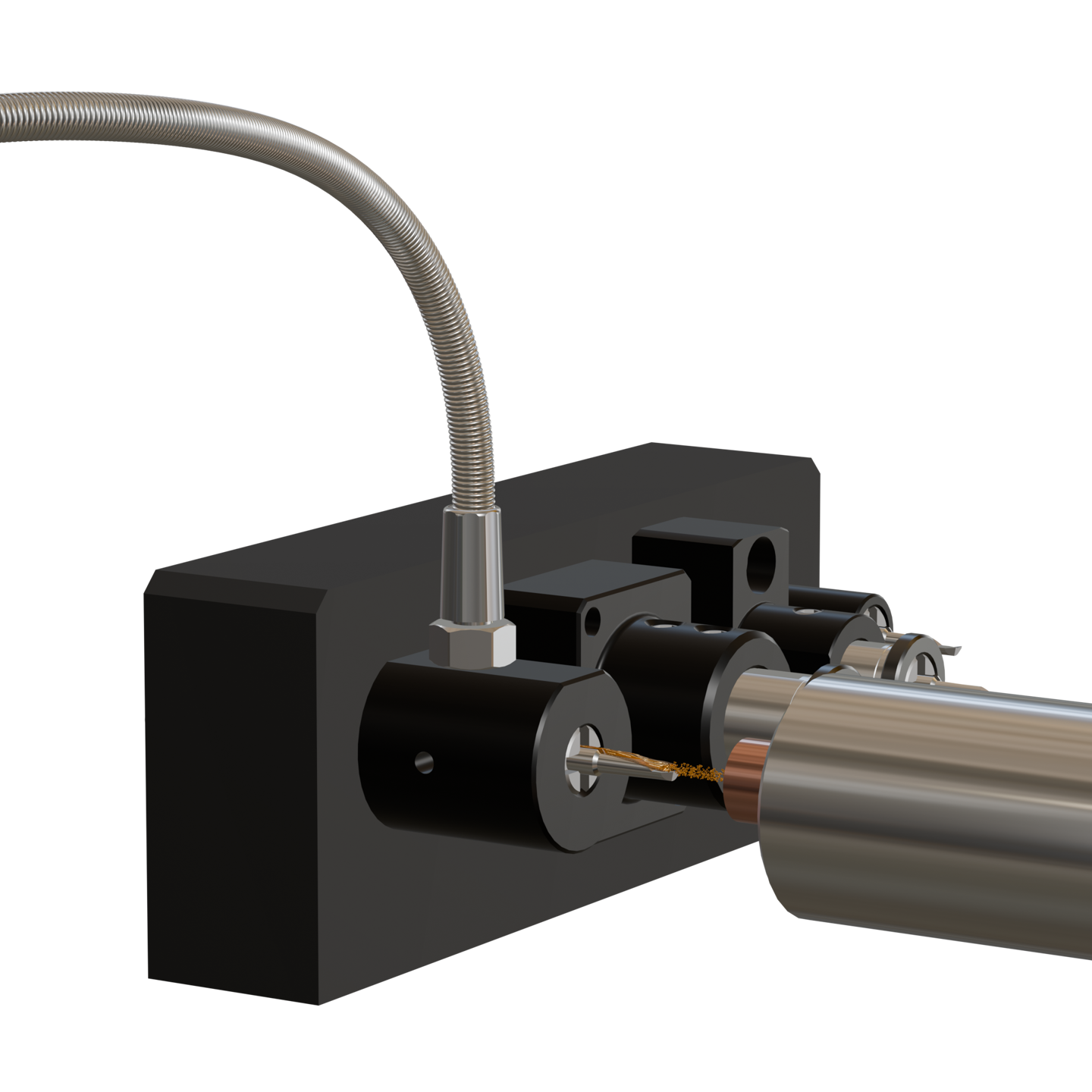

Precision meets efficiency in implant production
Find out how manufacturers of dental implants are almost doubling their production volumes - and at the same time taking surface quality to a whole new level.
Properties of dental implants
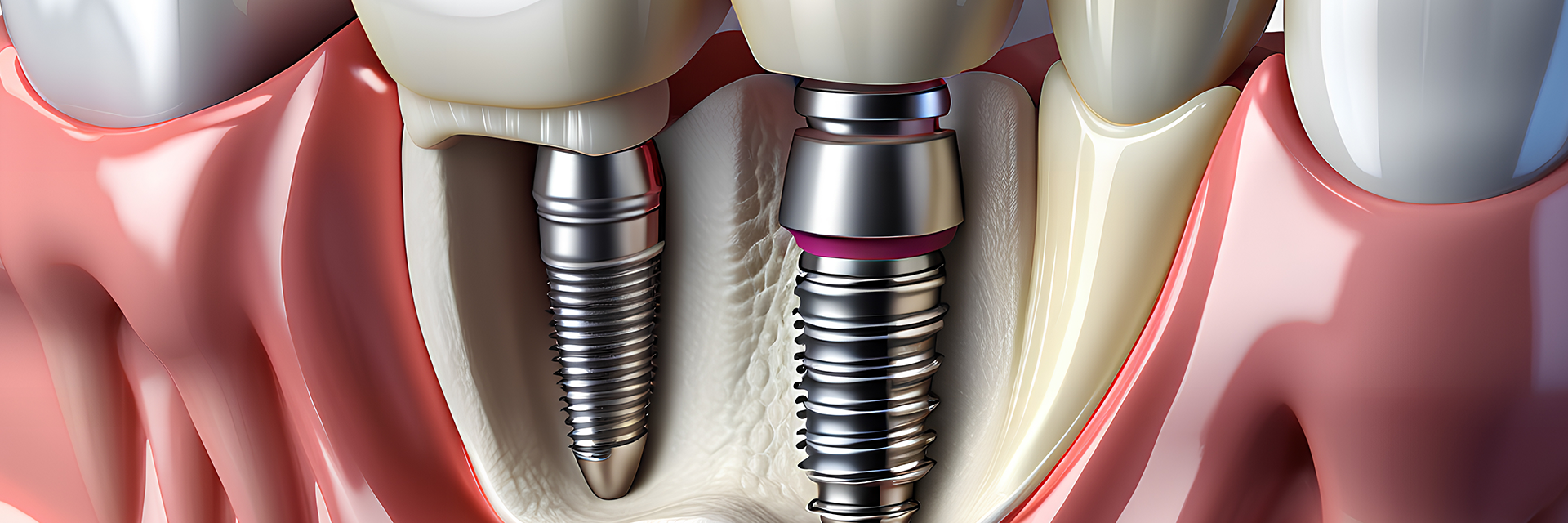
Dental implants are made of biocompatible titanium. The inner cone plays a decisive role here: it ensures an exact and stable connection between the dental implant and the implant abutment. However, a tight, resilient fit can only be guaranteed with the highest precision and perfect surface quality.
Challenges with the processing of titanium
These dental components are manufactured on swiss-type automatic lathes. The machining of titanium poses a particular challenge. Its low thermal conductivity leads to high cutting temperatures and the heat generated is primarily dissipated into the tool instead of the chip. In addition, the stickiness of titanium favors built-up edges, while long, tough chips make machining even more difficult. The high abrasion also accelerates the wear of the micro-tools.
Consequences
Unfavorably designed tools promote work hardening of titanium, which leads to rapid blunting and shortened tool life. The abrasive properties of the material accelerate tool wear, while material build-up on the cutting edge worsens the surface quality - with possible scoring, scratches or dimensional deviations. High temperatures during machining can also cause rejects. Tool breakages or strong tool vibrations, for example at the transition from the internal cone to the internal hexagon, are particularly critical.
Solution
Through decades of collaboration with leading dental companies, IFANGER has developed the Swiss-MicroTurn MTEE 42504-R-TiAlN and MTEE 42206-R-TiAlN specifically for machining dental implants made from Grade 4 and Grade 5 titanium. These tools impress with their exceptional robustness and cutting performance, enabling the production of precise tapers and internal contours, outstanding surface finishes, and burr-free machining. Comparison with competitor products:
While comparable internal turning tools used for machining Grade 4 titanium typically need to be replaced after approximately 2,000 implants, the Swiss-MicroTurn MTEE tools reliably machine 4,000 implants or more, providing up to twice the tool life. They maintain excellent surface quality, dimensional accuracy, and burr-free results right up to the last implant.
Grade 5 titanium can also be machined efficiently and economically using Swiss-MicroTurn MTEE tools. In combination with an active chip-breaking cycle, they ensure high process stability and reliable chip evacuation. This results in a highly productive and dependable machining process with consistently high-quality components.
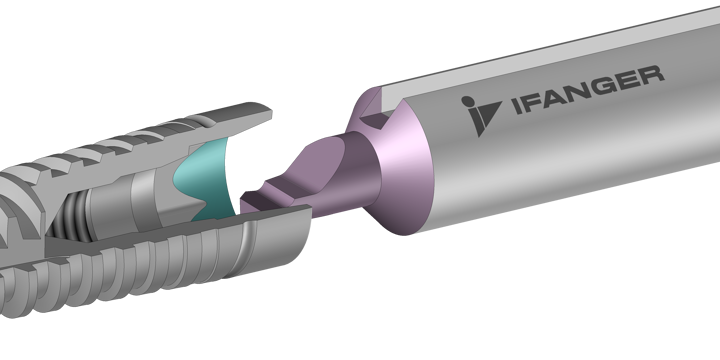
Copilot said: For machining on the sub-spindle (C2), we recommend the MTHA/SK tool holder type (link to Success Story). The integrated Quick-Change system enables fast, precise and reliable tool changes within seconds. The high-pressure coolant connection delivers the cutting oil directly into the machining zone, as close as possible to the cutting edge. This ensures efficient chip evacuation, optimal temperature control and significantly improved machining conditions. As a result, process reliability is increased and tool life is extended.